



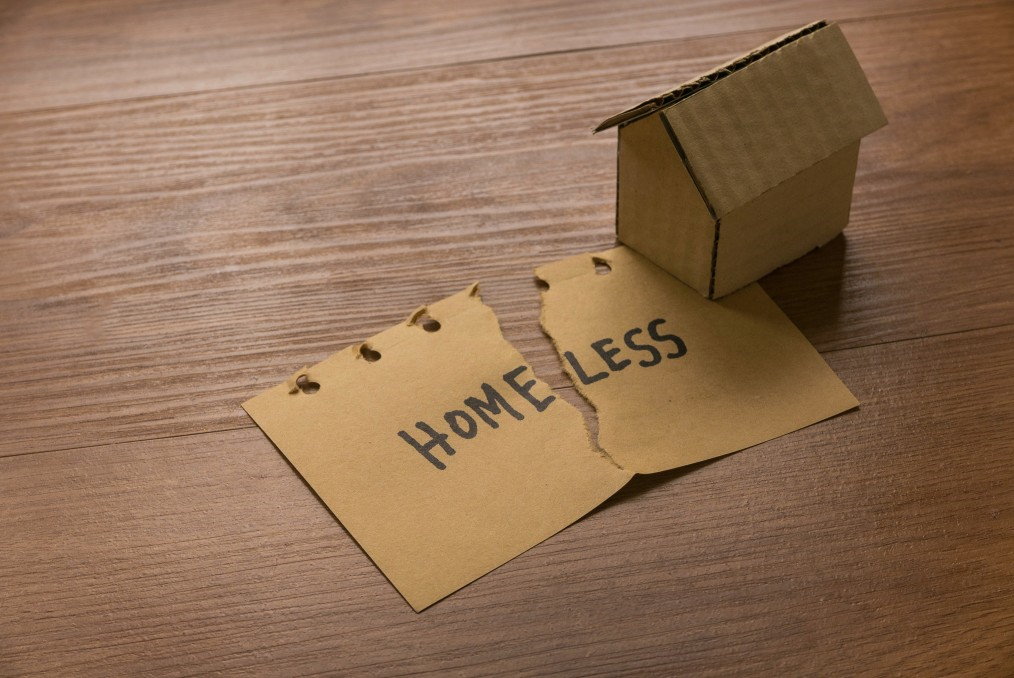


As Section 8 waitlists close across numerous states and federal housing funding faces reductions, low-income tenants are increasingly seeking alternative options. If you're unable to secure a Section 8 voucher or find the wait too lengthy, several state-specific programs can…
Understanding the Section 8 Rental Assistance Program

Introduction
Unlike other species, humans require specific basic needs to sustain at least a minimal standard of living. These fundamental requirements are essential for our survival, well-being, and growth.
These needs drive our actions, which ultimately shape our development. Among these essentials is shelter. However, not everyone can fulfill this basic necessity, which led to the creation of the Section 8 Rental Assistance Program as a government intervention aimed at helping individuals meet this critical need.
The Housing Choice Voucher Program, commonly referred to as Section 8, is a federal initiative designed to assist low-income families, the elderly, and individuals with disabilities in securing affordable housing.
- Participants not only receive housing vouchers for rental support but can also choose accommodations that adhere to the program’s guidelines.
The federal rental assistance program is funded by the Department of Housing and Urban Development (HUD), providing very low-income individuals, families, the elderly, and those with disabilities the support they need to secure safe, decent, and sanitary housing in the private market.
This program is specifically aimed at helping the elderly, disabled, and low-income families afford suitable housing.
Eligible individuals are issued a Housing Choice Voucher (HCV) after being assessed by their local Public Housing Authority (PHA).
How Does Section 8 Support Housing Costs?
Section 8 housing vouchers are administered by local public housing agencies (PHAs), which operate under the U.S. Department of Housing and Urban Development (HUD).
The local PHA determines the level of housing assistance a participant or their family is eligible for and pays the landlord directly on their behalf.
However, the program is designed to offer support while still requiring contributions from participants. Hence, families enrolled must allocate at least 30% of their monthly income toward rent and utilities, in accordance with HUD guidelines.
The PHA disburses a housing subsidy directly to the landlord for the participating family.
What Programs Are Available?
The aid programs associated with Section 8 include the Housing Choice Voucher Program (HCV) and the Project-Based Voucher Program (PBV).
Both are managed by HUD. They share many similarities, but key differences exist as well.
Strict eligibility criteria focused on family size and income govern both programs, which are exclusively accessible to low-income individuals requiring assistance with rent.
Project-Based Voucher Program
In contrast to the Housing Choice Voucher Program, the project-based voucher program is tied to specific units in larger complexes.
This means that the vouchers are not issued to the tenant directly; instead, they are associated with designated units under a contractual agreement with the property owners.
The affordable housing units involved in this program are those where landlords have made agreements with state or local public housing authorities to provide rentals to low-income families and individuals.
Within the project-based voucher program, the PHA enters into contracts with property owners to support a specified number of units for a defined period. The PHA refers families from its waiting list to fill vacancies in these projects. If a family vacates a project-based unit, they lose their right to continued housing assistance, as the support is linked to the unit itself.
The Housing Choice Voucher Program
The tenant-based housing program is significantly larger in scope. It has provided housing assistance and community improvements to nearly 2.3 million American households.
Offering greater flexibility regarding participants’ housing choices, this program differs from the project-based model. However, it can sometimes be more costly for applicants.
- For instance, project-based payments may not exceed 30% of an applicant’s income, while the income contribution for the housing voucher program might surpass that threshold.
How to Apply for the Program
To apply for a housing voucher, contact your local PHA. If immediate assistance isn’t available, you may be placed on a waiting list once your application is processed. For additional support, locate your nearest HUD office.
How to Qualify for Section 8 Housing
Eligibility for Section 8 hinges on four key criteria. A household must satisfy these requirements to be viewed as eligible for the Section 8 Housing Choice Voucher through their local Public Housing Authority, commonly called a PHA.
The four primary requirements are:
- Type of Household
- Financial Status
- Citizenship Status
- Background, Rental, and Criminal History
Type of Household
Candidates must first clearly define their family situation. The Department of Housing and Urban Development (HUD) defines a family as a unit consisting of individuals living together, which could be a single person, including elderly or disabled individuals, or any other single person.
A family can include those with children, elderly members, disabled individuals, those who have experienced displacement, or the last tenant’s family member. Even a child who is temporarily absent due to foster care is considered part of the family.
Furthermore, a family may also consist of “two or more individuals not related by blood, marriage, adoption, or legal definition, but can demonstrate prior cohabitation or certify that each person’s income and resources are available to meet the family’s needs.
The above illustrates that…
A family isn’t strictly defined by blood relationships; thus, individuals, singles, and roommates can be recognized as a family according to HUD. Therefore, the term “household” might offer a clearer understanding of how HUD defines family.
When the head of the household noted on the application for a Housing Choice Voucher is at least 62 years old, the household is identified as senior or elderly. The phrase senior household can also apply to such a family.
A handicapped household is characterized by the presence of at least one head of the household listed on the Housing Choice Voucher application as disabled.
Financial Status
The eligibility for a housing choice voucher is predominantly determined by the income level of a family in relation to the local area median income, as the primary goal of Section 8 is to assist low-income earners in paying their rent.
HUD provides local PHAs with three core income categories to consider when assessing an applicant’s income level.
- Extremely low-income: Families applying for Section 8 Housing Choice Vouchers fall into this category if their income is 30% of the area’s median income.
- Very Low-income: This group consists of applicants whose income reaches 50% of the area’s median income.
- Low-income: Applicants in this category have incomes that are 80% of the area’s median income.
It’s crucial to recognize that the PHA will heavily depend on the family size reported in the Section 8 Housing Choice Voucher application to target the appropriate income level for the applicant.
- For example, a household with multiple adults earning a combined total of $50,000 would be seen as having a lower income than a single adult earning $40,000.
Moreover, HUD stipulates that those classified as severely low-income will be prioritized for the majority of Section 8 resources.
What Constitutes Family Earnings?
The primary income channels for the PHA are what need to be reported on tax returns, which directly influences household income levels.
Examples of income sources include salaries, commissions, tips, investments, inheritances, insurance payouts, legal settlements, retirement benefits, social security, disability payments, welfare support, and workers’ compensation.
- It’s important to note that only adult applicants are required to disclose their income.
Citizenship Status Qualification
To qualify for a Section 8 Housing Choice Voucher, prospective recipients must either be U.S. citizens or possess acceptable immigration status. Even if you are not a U.S. citizen, you must adhere to the following guidelines for the local PHA to confirm your family’s eligibility for Section 8 benefits:
- A signed declaration of your eligible immigration status.
- Documentation from the Immigration and Naturalization Service (INS).
- A signed consent to release your INS information, which will be used solely to determine your Section 8 eligibility.
Criminal History, Rental History, and Background Checks
Comprehensive investigations will be conducted on all family members’ criminal histories. Certain criminal offenses may lead to immediate disqualification from the application process.
These include:
- Applicants who have faced eviction due to drug-related convictions within the last three years are not eligible for Section 8 housing.
- Any family members convicted of manufacturing meth in subsidized housing are disqualified.
- Family members who are permanently registered as sex offenders are ineligible.
According to HUD regulations, each PHA will conduct interviews with applicants for Section 8 housing choice vouchers and follow its own qualification protocols. Additional paperwork may also be required to substantiate eligibility.
Documents such as birth certificates, pay stubs, and tax returns may be needed. To acquire the application and further details on the Section 8 Housing Voucher Program and its eligibility criteria, contact your local Public Housing Authority.
Additional information can be found on your local Public Housing Authority’s website.
What Is the Income Limit for Section 8?
Details regarding the Section 8 Housing Choice Voucher income limit differ by city and county. For example, the income threshold varies between California and Los Angeles. Therefore, candidates should reach out to their local Public Housing Authority for clarification.
The U.S. Department of Housing and Urban Development (HUD) typically releases median income levels on a national scale, which often includes locally adjusted low-income limits that the local Public Housing Authority utilizes for eligibility assessments.
HUD establishes annual income limits based on family size, categorizing them as extremely low-income (30% of the median area income), very low-income (50% of the median area income), and low-income (80% of the median area income).
Only households meeting the extremely low and very low-income criteria are eligible for Section 8 assistance.
Nonetheless, low-income thresholds apply only in situations where landlords transition from a project-based scheme to a tenant-based program, under specified circumstances.
Furthermore, 75% of the program’s vouchers—those allocated to applicants whose earnings fall below 30% of the median regional income—must be reserved for households classified as extremely low-income, as mandated by Public Housing.
Addressing Discrimination in Section 8 Housing
Unfortunately, discrimination remains a challenge in Section 8 housing. This discrimination can manifest in various forms, including based on race, gender, sexual orientation, religion, low income, disabilities, and even family status.
Such discrimination can sometimes prevent voucher holders from being considered for housing, despite their ability to afford rent.
Fortunately, housing advocates and the Biden administration are taking steps to update outdated laws and ensure Section 8 residents are safeguarded against all forms of discrimination within the realm of Section 8 Housing Vouchers.
Inclusionary zoning is one initiative the Biden administration is promoting to combat housing discrimination. This approach encourages and facilitates mixed-income neighborhoods, providing incentives for the inclusion of affordable housing units within new developments.
Simultaneously, it aims to enhance the availability of affordable housing while fostering a more inclusive community.
Inclusionary zoning regulations were established to specifically address a long-standing history of “exclusionary zoning” regulations that deepened racial and economic divides.
The Biden administration is also working to eradicate “redlining,” a discriminatory practice in Section 8 housing that involves denying or charging higher fees for the same services based on a person’s race, ethnicity, religion, or other characteristics.
The HUD provides examples of what qualifies as housing discrimination on their website: Examples of housing discrimination.
Furthermore, the Public Housing Authority approaches issues of housing discrimination with seriousness and urgency. If you have any complaints related to housing, it is crucial to file them with your PHA office promptly.
Individuals with Disabilities and Their Specific Requirements
Beyond prejudice, individuals with disabilities possess specific needs that must be met to fully benefit from the housing assistance these programs offer.
Inadequate accommodations can greatly hinder their ability to use and enjoy their homes. Consequently, laws now mandate that landlords provide reasonable modifications and adjustments when necessary. This shift is largely due to various anti-discrimination statutes.
A landlord must alter their policies and procedures or implement necessary changes. The reasonableness test still applies, meaning the required accommodations must be deemed reasonable.
In summary, reasonable modifications and adjustments are essential for individuals with disabilities to effectively use and enjoy their residences. Such requests can be made through a straightforward process.
You can either write to your PHA requesting the modification or reasonable accommodation you need or arrange for an informal hearing with the PHA.
Don't MissConsequences of Housing Shortage for Low-Income FamiliesUp NextHow to Preserve Your Section 8 Status Amid Recent Losses for 17000 Families
Alternative Housing Solutions by State for Those in Need

Locating Free Food and Clothing Assistance Through HUD

If you're finding it challenging to pay for food or clothing, the HUD Find Shelter tool can be of assistance. Many assume this government resource solely helps in locating emergency shelters, but it also links you to food pantries, soup…
Discovering No-Cost Sober Living Options

Finding a supportive sober living environment is essential for anyone in recovery. It's about more than just having a place to stay; it’s about establishing a setting where you can heal, develop, and continue along the path to lasting sobriety.…