



Who is eligible for Section 811 Housing? To qualify for Section 811 housing, applicants must meet the following criteria: At least one adult member of the household must have a disability, which can include a physical or developmental disability, as…
Farm Labor Housing Programs by USDA Section 514 and 516
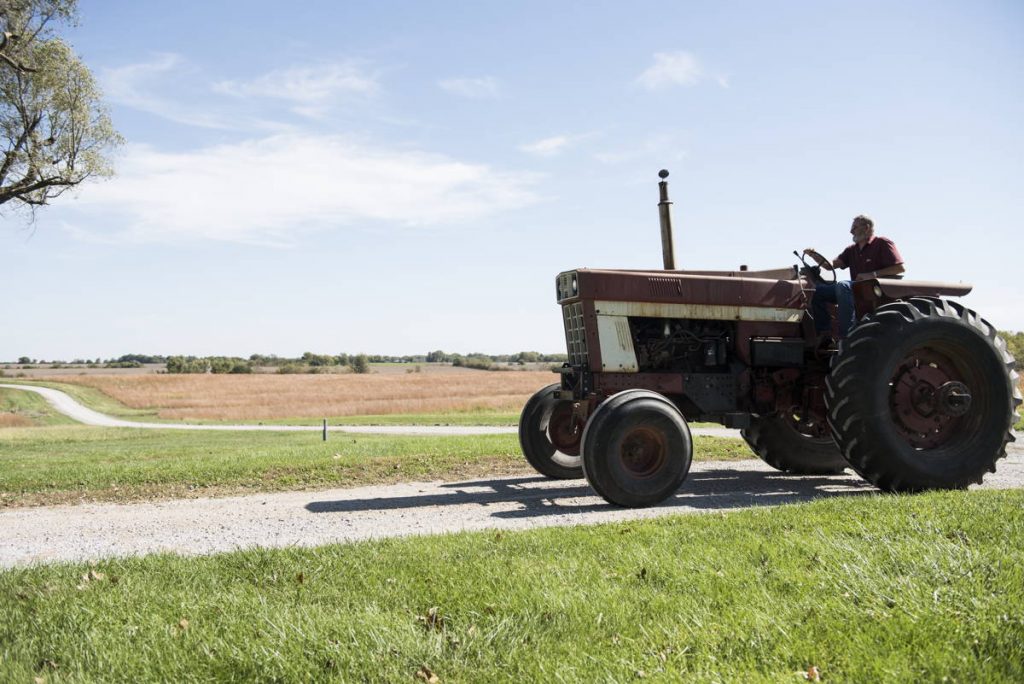
Are you considering your housing options for the upcoming year? If you’re aiming to pursue a career in farming and agriculture, the U.S. Department of Agriculture’s Section 514/516 Farm Labor Housing Program could be a viable solution.
This initiative offers grants and low-interest loans to individual farmers or nonprofit organizations for the purpose of constructing, purchasing, repairing, or enhancing their housing.
Read on to discover how to leverage this excellent opportunity.
What is Farm Labor Housing?
According to Section 516 of the Housing Act of 1949 (42 U.S.C. 1441 et seq.), Section 516 grants form part of a USDA farm labor housing program. This allows eligible individuals, nonprofit organizations, public bodies, or Indian tribes to secure grants or loans for developing their farm labor housing.
A Section 514 loan can be used concurrently with a Section 516 grant, as long as the housing addresses a “pressing need” and requires support from the Rural Housing Service (RHS).
Grants can cover up to 90% of the development costs, with at least 10% of the Section 516 funds earmarked for migrant and domestic farmworker housing each fiscal year. Applicants need to secure at least 10% of total development costs through their own means or alternative funding, which can include Section 514 loans.
The financial aid from this grant can be utilized to acquire, improve, or construct housing as well as related facilities for farmworkers, in addition to purchasing and enhancing the land where the housing is situated. This may encompass:
- Waste disposal systems
- Water supply systems
- Street installations
- Parking areas
- Driveways
This also covers the purchase and installation of various appliances such as:
- Refrigerators
- Ranges
- Dryers
- Clothes washers
Additional facilities related to the housing project could include:
- Recreation center
- Maintenance workshop
- Laundry room
- Small infirmary
- Living quarters
- Office
- Daycare center
Eligibility
To qualify for the 514 and 516 programs, individuals or nonprofit agencies must be delivering farm labor services such as:
- Preparing the soil for harvesting or raising any aquaculture or agricultural commodity
- Planting, netting, catching, handling, drying, grading, storing, preserving, or packing unprocessed aquaculture or agricultural products
- Transporting to market, storage, or a carrier for processing or sale
To become eligible for a Farm Labor Housing Loan, applicants must fulfill the aforementioned requirements along with the following criteria:
- A nonprofit organization of farmworkers: If applying as such, your organization needs representation on the Board of Directors in the area where the housing will be located.
- A broad-based nonprofit organization: Nonprofit organizations must comply with specific requirements and maintain a membership reflective of the interests where housing is situated.
- A limited partnership with a nonprofit partner: This partnership must be established according to 7 CFR 3560.55(d).
- An agency or political subdivision of local or State government.
- A federally recognized Indian tribe.
Application Process
The application process for the farm labor housing program consists of six steps, each detailed in their own sections.
1. Initial Application
The initial application for off-farm labor housing mirrors the requirements of Section 515 project applications.
2. Completeness Review
A loan originator must assess all initial applications for their completeness in adherence to the instructions outlined in Section 2 of Chapter 4.
3. Eligibility Review
During the eligibility assessment, a loan originator must ensure that the requested funds comply with Paragraph 12.3 through 12.6 of the Section 514/516 Farm Labor Housing Program. Additionally, they should observe guidelines from Chapter 4, bearing in mind that applications should not be excluded if they fall outside a designated area.
4. Scoring and Ranking of Initial Applications
A State Office will score and rank the initial application submitted for the Farm Labor Housing loan and grant as per the criteria set by the National Organic Farmers Association and the instructions in Chapter 4, Section 2.
5. Selection and National Ranking of Initial Applications
- The Agency will evaluate, score, and rank each application based on the criteria published in the NOFA. Once the scoring process is complete in each State, the State Office will forward all qualified applications to the National Office for further evaluation.
- Off-Farm Labor Housing Applications will be ranked nationally, with funding allocated to the highest-scoring applications. If an applicant decides not to continue, funds earmarked for their project will go to the next highest-ranked application.
6. Notification of Initial Applications Selection
Following the selection of initial applications, the National Office will inform each State Office about the successful candidates for funding. Subsequently, the State Office will notify selected applicants and request submission of a final application.
Each applicant will receive one of three types of letters:
- A Handbook Letter 106 (3560), Notice of Pre-application Review Action
- A Handbook Letter 107 (3560), A Letter Informing the Applicant of the Lack of Funds
- A Handbook Letter 108 (3560), Letter Denying Funding due to Ineligibility
How is it Allocated?
On-Farm Labor housing projects aim to provide affordable accommodations specifically for farmworkers at the location they work at where an applicant is employed. Loans are granted directly to farm owners or their associations who wish to offer housing for the farmworkers they employ.
Furthermore, on-farm labor housing is not confined to specific designated areas and can be built in both rural and urban settings, as long as the applicant can articulate a valid justification for their needs.
Each year, the Agency allocates funds specifically for the development of on-farm labor housing. Field Offices are notified, with the new allocation announced in the Federal Register. Applicants interested in determining their chances of receiving funding are encouraged to submit their details to their Field Office.
Bear in mind that applications will be processed on a first-come, first-served basis from National Office funding. Additionally, on-farm applications are accepted year-round. On-farm applications should include the On-Farm Labor Housing Loan Checklist.
Apply for Farm Labor Housing Today
The U.S. Department of Agriculture’s Section 514/516 Farm Labor Housing Program presents an excellent opportunity for farmers, nonprofit organizations, and other groups to gain the support they require. This initiative helps them access the housing they deserve, while simultaneously enhancing the economy through their contributions to the agricultural landscape. By following the outlined guidelines, you too can benefit from the assistance the government offers.
Understanding the Section 811 Housing Program for Individuals with Disabilities

Understanding Permanent Supportive Housing

The demand for permanent supportive housing (PSH) is on the rise for individuals experiencing homelessness. Research indicates that this type of housing provides significant benefits for those in need. Permanent supportive housing is a type of subsidized accommodation. It offers…
Accessible Housing Solutions for Individuals with Disabilities

Many individuals with disabilities find themselves without access to affordable housing, often unaware of their eligibility or the various programs designed to assist them. Some have relinquished the search for assistance altogether, discouraged by factors such as discrimination and a…