



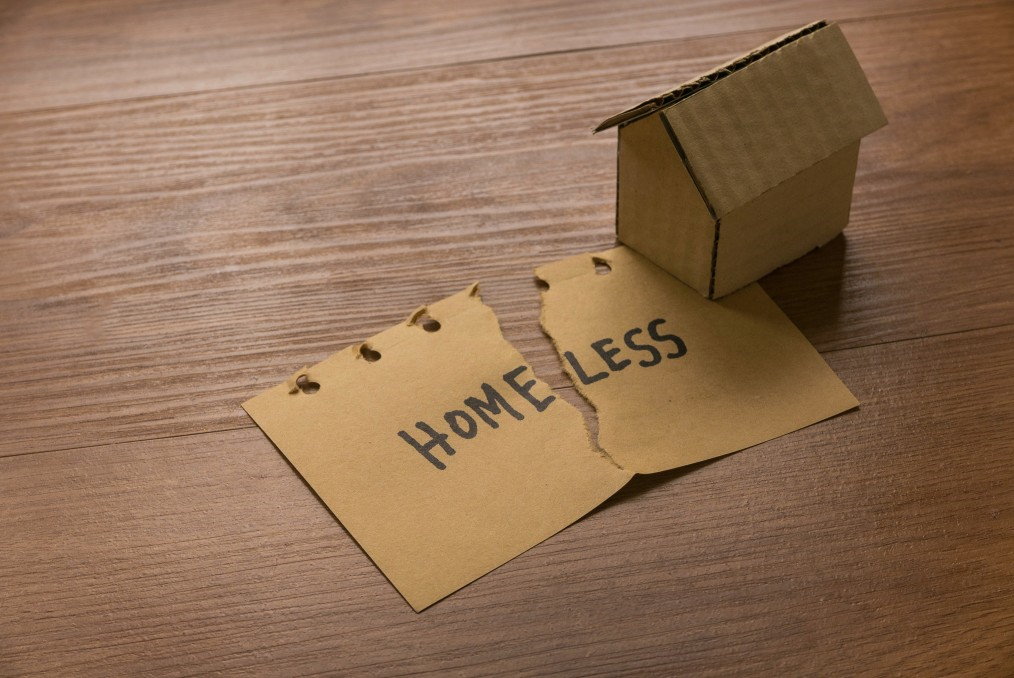


Affordable housing remains a critical issue affecting millions of Americans. The disparity between housing prices and income levels is widening, and the upcoming election could significantly shape housing policies and funding for those relying on housing assistance programs for the…
Exploring Tax Incentives for Affordable Housing Development

One of the key affordable housing initiatives launched by the federal government of the United States is the Low-Income Housing Tax Credit (LIHTC).
Established as part of the 1986 tax reform legislation, the LIHTC aims to address the scarcity of affordable housing for low-income individuals. Today, it serves as an essential mechanism in the development of nearly all affordable housing programs available for financially vulnerable families across the nation.
Through the LIHTC, low-income housing projects and developers are granted tax credits, encouraging the creation of more affordable housing options for low-income families within various communities.
The allocation of these tax credits occurs on an annual basis, facilitating the rehabilitation, acquisition, and construction of rental properties specifically aimed at low-income households.
Tax credits are distributed by the federal government to different states, which, in turn, allocate the credits to developers and investors who meet the specified criteria for providing low-income housing projects.
How To Qualify For The Low-income Housing Tax Credit
Numerous properties and developers strive to qualify for the low-income housing tax credit (LIHTC); however, funds are often limited, necessitating an application process to determine eligibility. Below are some of the criteria that a housing project must satisfy to qualify for the LIHTC.
- The rental units must be available for tenants earning approximately 50% of the area’s median income.
- The housing project should cater to larger families with low monthly housing costs and support low-income households.
- Housing developments located in rural areas are prioritized.
- Projects may qualify for a tax credit based on their feasibility for low-income housing.
- Housing must be made accessible to specific populations, such as individuals with special needs or the homeless.
- Rehabilitation of rental properties must be rent-restricted for low-income families.
- Projects must remain available to low-income tenants for a minimum of 15 years.
Understanding Low-income Housing Tax Credits of 4% and 9% That Are Available
The federal government allocates two distinct types of tax credits for low-income housing projects, commonly referred to as the 4 percent credit and 9 percent credit.
The 9% credit is designated for housing projects that do not utilize other government housing subsidies. This credit is awarded by the state through the Housing Finance Authority (HFA) and the Qualified Allocation Plan (QAP), which outlines the necessary requirements for project applications. Each state has unique eligibility criteria, including the number of available units, overall project cost, and housing quality.
To apply for the 9% tax credit, housing projects must go through the Multifamily Finance 9% RFP process, which is highly competitive, taking place only twice each year. To secure funds from federal or state agencies, applicants are required to submit a singular application and adhere to established procedures.
The 4% tax credit is awarded to housing projects that can integrate other government housing subsidies. This credit is allocated by the federal government and does not affect the annual allocation from HFA. It can be funded through government subsidies aimed at affordable housing acquisition and rehabilitation. Applications for the 4% tax credit are accepted throughout the year and must be submitted via the state’s Housing Resource Center (HRC), which distributes the funds.
Importantly, applicants may receive only one type of credit for a specific housing property at any given time, whether it’s the 9% or 4% credit. However, if an applicant has multiple housing projects, they can apply separately for different credits per project.
Both the 9% and 4% credits are applicable for approximately ten years on a property, effectively covering nearly all tax expenses related to the housing project. Additionally, all housing initiatives participating in this program must commit to providing housing for low-income individuals for a duration of 15 years. Failure to comply could result in the revocation of the tax credits.
Conclusion
The Low-income housing tax credit (LIHTC) is a federal initiative designed to motivate private property owners to develop affordable housing for low-income families and individuals, thereby alleviating the issue of difficult housing placements in the country.
The Department of Housing and Urban Development (HUD), along with state Housing Finance Authorities (HFA), is responsible for setting the criteria for projects to qualify as private and local investors. It’s worth noting that the number of tax credits available is generally less than the number of eligible projects, making the competition quite fierce.
Don't MissConsequences of Housing Shortage for Low-Income FamiliesUp NextHow to Preserve Your Section 8 Status Amid Recent Losses for 17000 Families
Implications of the 2024 Election on Affordable Housing

$70 Billion Boost to HCV Initiative

Additional support for the Housing Choice Voucher program may be on the horizon, though it's not yet certain! The United States Senate has just unveiled a new piece of legislation, championed by Senator Elizabeth Warren (Massachusetts), aiming to immediately augment…
Join Us in Expanding Affordable Housing Opportunities

Your Affordable Housing Heroes have consistently aimed to foster a positive impact in our nation, offering valuable resources to assist those in need to navigate government initiatives and secure the housing they rightfully deserve. Now, we have a unique chance…