



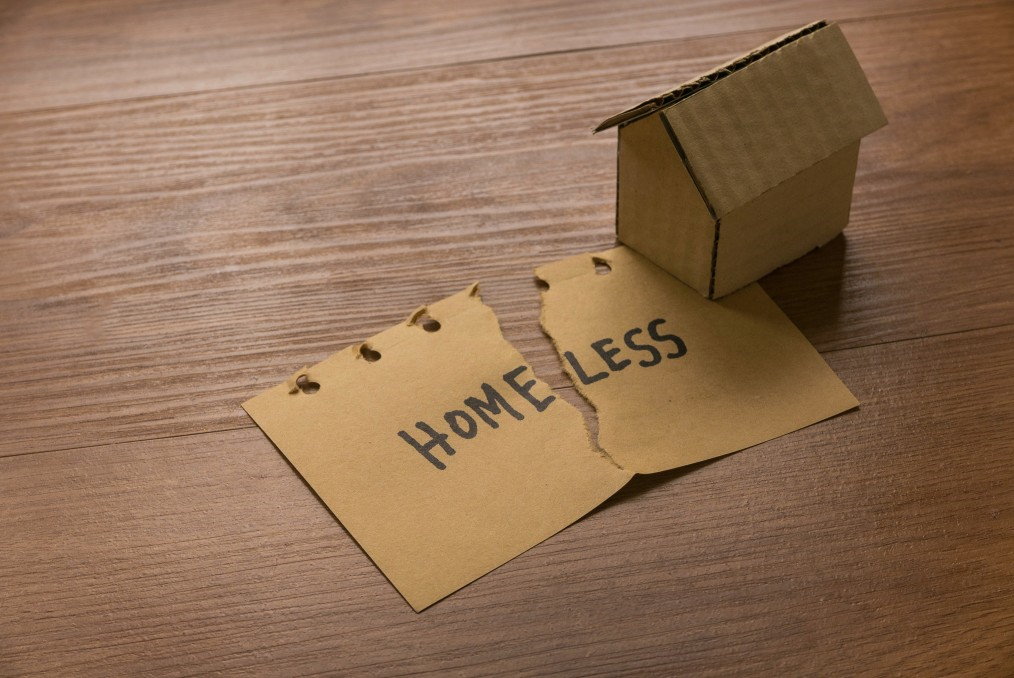


Additional support for the Housing Choice Voucher program may be on the horizon, though it's not yet certain! The United States Senate has just unveiled a new piece of legislation, championed by Senator Elizabeth Warren (Massachusetts), aiming to immediately augment…
Affordable Housing Advocates FHEO and FHIP

What is the FHEO (The Office of Fair Housing and Equal Opportunity) and its associated programs: FHIP and FHAP?
What is the FHEO?
Established by the Fair Housing Act of 1968, the Office of Fair Housing and Equal Opportunity (FHEO) is the primary agency within the United States Department of Housing and Urban Development.
This agency aims to promote equal housing opportunities for all residents in America. By enforcing laws that prohibit housing discrimination based on race, color, religion, sex, national origin, disability, and familial status, the FHEO fulfills its mission effectively.
The FHEO also addresses complaints regarding discrimination encountered during home sales. Although its responsibilities are extensive, the agency primarily concentrates on affordable housing properties. Specifically, it pays particular attention to those benefiting from Low-Income Housing Tax Credits or supported by HUD-insured loans.
How to file a complaint with the FHEO
If you’ve faced housing discrimination, there are several ways to submit a complaint through HUD.
- File a complaint form on the HUD website.
- Email a complaint form to your regional FHEO Office.
- Contact an FHEO specialist at 1(800) 669-9777 or 1(800) 877-8339.
- Send a complaint via mail to your local FHEO Office.
HUD also provides toll-free teletypewriters and disability-related assistance upon request.
History of the FHEO
Prior to its passage into law, the Act encountered challenges from 1966 to 1967. One major hurdle was Congress’s inability to garner sufficient political backing for its passage, despite the Act being a sequel to the Civil Rights Act of 1964.
The lack of support at that time stemmed from many states having already enacted their fair housing laws; consequently, Congress felt there was no pressing need for a federal statute.
However, circumstances shifted dramatically after the assassination of Martin Luther King Jr. on April 11, 1968. Dr. King had advocated for a federal fair housing law throughout 1966, but his efforts fell short. Following his death, civil unrest erupted, prompting Congress to finally pass the bill.
Since its inception, the Fair Housing Act has undergone two amendments. The first occurred in 1974, which included sex as a protected characteristic.
The second amendment took place in 1988, broadening the scope of protected categories and addressing enforcement shortcomings from the original Act.
This amendment also introduced protections for individuals with disabilities and prohibited discrimination based on familial status.
With these changes came significant advantages, allowing aggrieved individuals to seek redress through a HUD Administrative Law Judge or in federal court.
The Department of Justice was also empowered to impose harsher penalties on those who violated the Act.
Complaints and Investigation Process
The FHEO is responsible for handling housing discrimination complaints filed through the United States Department of Housing and Urban Development (HUD). For instance, if a tenant believes they’ve been subjected to discrimination due to their disability, they can lodge a complaint. Some clear cases of discrimination based on disability include:
- Being asked discriminatory questions regarding their disability.
- Being denied an opportunity to apply for housing because of their disability.
- Being refused a service animal.
- Facing higher rent charges due to disability status.
Following the filing of a complaint, the evaluation process begins, which entails intake, investigation, conciliation or voluntary compliance, and potential legal action.
Intake
This initial step involves assessing any complaint submitted to HUD. They start by determining whether the reported incident violates established laws. If the report indicates discrimination, the FHEO will formalize the complaint.
An interview may be conducted with the complainant to gain deeper insights into the situation.
Afterward, a formal written complaint may be drafted, and the complainant will be asked to sign it before notifying all involved parties of the filed complaint. On some occasions, the FHEO may refer complaints to state or local entities for investigation.
Investigation
Once a formal complaint is registered, HUD assigns one or more investigators to examine the alleged discrimination.
The complainant may be requested to provide additional details such as the time and location of the incident, individuals present, and any pertinent documents related to the complaint.
Interviews will then be conducted with all involved parties, including witnesses. The party accused of discrimination will get an opportunity to respond to the allegations. Investigators may also inspect relevant properties and review relevant documents.
The tenant will also be interviewed regarding the alleged discrimination, with requests for documentation supporting their claims of fair housing violations.
Upon concluding the investigation, HUD will provide the complainant with a written report summarizing its findings.
Conciliation or voluntary compliance
HUD plays a role in assisting both the complainant and the accused party in arriving at a resolution that does not involve legal action. This process can occur at any point during the investigation. It’s important to note that any agreement reached is voluntary; either party can choose to accept or refuse it.
On certain occasions, investigators may encourage both sides to come to an agreement. If an agreement is reached, HUD will create an official document for both parties to sign, termed a conciliation or voluntary compliance agreement.
Upon signing, the investigation will be concluded. HUD may subsequently follow up to ensure the agreement is adhered to.
Legal action
This stage represents the final step in the complaint and investigation process and occurs if discrimination is established, and no agreement can be reached.
The complaint may lead to legal proceedings, which could manifest as a Fair Housing Act case or a civil rights case pursued by the government, depending on the findings from HUD’s investigation.
Such cases can result in remedies such as compensation, policy changes, or training. Cases before a HUD Administrative Law Judge are typically managed by HUD’s office of general counsel, while federal court cases fall under the purview of the Justice Department.
If legal action is taken, the complainant will not incur any legal fees imposed by the government.
Programs Associated with the FHEO
The Fair Housing Initiative Program (FHIP) and the Fair Housing Assistance Program (FHAP) are among the other initiatives linked to the Fair Housing Act. Both were established to bolster the objectives of the Fair Housing Act.
These programs demonstrate support by allocating financial resources and grants to organizations and agencies committed to ensuring that anti-discrimination laws in housing are properly enforced.
Each program features distinct grants aimed at different facets related to the Fair Housing Act. However, specific eligibility criteria must be met before organizations or agencies can apply for these grants.
The Fair Housing Initiative Program (FHIP)
The Fair Housing Initiative Program (FHIP) serves as a benefits initiative focused on developing, executing, and managing or coordinating programs and activities that enforce the rights established by the Fair Housing Act or analogous state and local fair housing laws.
This is achieved through funding fair housing organizations and other non-profits that aid individuals who feel they have been subjected to housing discrimination.
Currently, this program is the sole Federal grant initiative involved in fostering private partnerships to combat and address housing discrimination.
To qualify for the FHIP benefit program, applicants must be non-profit fair housing organizations engaged in enforcement activities aimed at preventing or eliminating discriminatory housing behaviors.
Types of FHIP Grants
The FHIP offers several types of grants, including the Fair Housing Organizations Initiative (FHOI), the Private Enforcement Initiative (PEI), and the Education and Outreach Initiative (EOI).
- The Fair Housing Organizations Initiative (FHOI): This initiative provides financial backing to established non-profit fair housing organizations. The funds are intended to enhance the capabilities and efficiency of these groups by supporting fair housing enforcement and educational activities. FHOI also fosters the growth and expansion of organizations that advocate for the rights of underrepresented groups, especially individuals with disabilities, thereby strengthening the national fair housing movement.
- The Private Enforcement Initiative (PEI): In contrast, the PEI offers various support to the national network of fair housing organizations, aiming to prevent or eliminate discriminatory housing practices. This is accomplished by funding non-profit fair housing organizations to undertake testing and enforcement actions.
- The Education and Outreach Initiative (EOI): The EOI grant’s objective is to broaden community education programs concerning fair housing rights and obligations. These grants are provided to state agencies, local government entities, and non-profit organizations to inform both the public and housing providers about equal housing opportunities and the necessary steps for compliance with the Fair Housing Act. A priority of EOI in recent years has been to educate the public on actions they can take when facing foreclosure and to remain cautious of foreclosure programs designed to exploit minority homeowners.
Eligibility for FHIP Grants
- FHIP-FHOI: Only certified fair housing groups with a minimum of two years’ experience in complaint intake, investigation, testing for fair housing violations, and handling meritorious claims in the three years prior to application are eligible to apply.
- FHIP-PEI: Organizations that have a track record of enforcing fair housing laws and meet specific requirements regarding their past performance and expertise are eligible to apply for FHIP-PEI funding.
- FHIP-EOI: Applications for FHIP-EOI funding can be submitted by state or local governments, eligible fair housing enforcement organizations (with a minimum of two years of experience), additional fair housing organizations, and other public or private non-profit organizations advocating for groups protected under the Fair Housing Act.
The Fair Housing Assistance Program (FHAP)
The Fair Housing Assistance Program (FHAP) is a federal initiative overseen by the Office of Fair Housing and Equal Opportunity within the U.S Department of Housing and Urban Development.
This program provides noncompetitive annual funding to state and local agencies that enforce fair housing legislation that closely mirrors the Fair Housing Act.
Grants are exclusively available to state or local agencies that uphold fair housing laws considered substantially equal to the Fair Housing Act.
In essence, an agency qualifies for funding as long as the legislation it enforces includes provisions for judicial review, substantive rights, and other remedies similar to those in the Fair Housing Act. However, the HUD may also evaluate whether an FHAP agency is already serving the relevant area when determining eligibility.
Eligible activities for FHAP funding encompass complaint processing, training, the development of data and information systems, and other specific projects.
Fundamentals of Fair Housing – FHAP Investigation Course
This training is designed to equip FHIP and FHAP intake officers and investigators with a strong foundation to effectively and competently carry out their responsibilities.
The course prepares participants for the following upon completion:
- Ability to outline the essential steps in planning case investigations.
- Ability to identify and implement practical elements of proof as a framework for case investigation.
- Ability to describe methods for gathering evidence and interviewing witnesses.
- Ability to explain how to prepare final investigative reports and determinations.
Eligible participants for the FHAP Investigation Course must:
- Be employed by an FHIP or FHAP with less than three years of experience in fair housing.
- Support investigative activities within their organization.
- Complete NFHTA’s Basics of Fair Housing or have familiarity with its Learning Objectives.
Participants must attend all four classes, finish any pre-work and homework, and engage actively in the program, embracing new knowledge and skills while building relationships with fellow attendees.
You can register for this course on the National Fair Housing Training Academy website.
Don't MissEligibility Criteria for Section 8 Housing AssistanceUp NextChampions of Affordable Housing Trust Fund Solutions
$70 Billion Boost to HCV Initiative
Join Us in Expanding Affordable Housing Opportunities

Your Affordable Housing Heroes have consistently aimed to foster a positive impact in our nation, offering valuable resources to assist those in need to navigate government initiatives and secure the housing they rightfully deserve. Now, we have a unique chance…
VASH Program for HUD HCV Rental Assistance and VA Support

How does the HUD’s Housing Choice Voucher (HCV) rental assistance operate within the VASH program? HUD-VASH is the result of a robust collaboration between the Department of Housing and Urban Development (HUD) and the Department of Veterans Affairs (VA), aiming…